
Seminar Series on Future Literacy at the University of Mannheim – ENGAGE.EU
This workshop series aims to equip participants with conceptual frameworks and practical tools to navigate complexity and shape tomorrow actively. What we imagine about the future directly influences the choices we make today. Grounded in the UNESCO Futures Literacy Framework, the series invites participants to move beyond linear predictions and examine the unspoken assumptions that shape their view of what is possible. By combining theory and hands-on reflection, participants learn to treat uncertainty not as a threat to be minimized, but as an essential space for learning, agency, and innovation in their academic, professional, and personal lives.
General Information
Registration will open on 1 February 2027
To register, please click on the ENROLL button in the description of your desired course from the list below.
These courses are free of charge!
Language of instruction: English
The courses take place online.
Do you have any questions?: studiumgenerale@service.uni-mannheim.de
Future Literacy Course Programme – Spring 2027
Navigating Change: Practical Futures Literacy for an Uncertain World – Romana Oehmig/Kathrin Sieberling (Universität Mannheim)
Time:
Monday, 8 March 2027
5.00 p.m. – 7.00 p.m.
Place:
Online (via Zoom)
Number of participants:
20

Course description:
Can you actively shape the future instead of just reacting to it? Yes – by changing how you imagine tomorrow!
In this introductory workshop, you explore UNESCO’s concept of Futures Literacy, moving away from passive forecasting toward active agency. You’ll learn how hidden assumptions shape our view of what is possible – and how switching between different future scenarios uncovers new paths of action in the present.
Through reflection and practical exercises, you will build the confidence to treat uncertainty not as a threat, but as a creative space to navigate. Whether in your studies, career, or personal life – this workshop empowers you to break free from a sense of powerlessness and build resilience in the face of rapid change.
Designed as an accessible entry point, no prior knowledge of futures studies or forecasting is required. This session also serves as a foundational introduction for upcoming specialized workshops in the series, providing a practical mindset and toolkit to help you get the most out of deeper, topic-specific exercises.
About the lecturers:

Romana Oehmig brings over 25 years of industry experience from her long-standing career at SAP, where she focused on designing and leading training programs in innovation, business model development, and Design Thinking. Today, she bridges corporate practice and academic education as a lecturer at DHBW Karlsruhe and Mosbach as well as the universities in Wiesbaden and Mannheim.
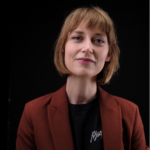
Kathrin Sieberling works at the Center for SME Research and Entrepreneurship (ifm) at the University of Mannheim. As a lecturer in Innovation and Entrepreneurship, she specializes in Futures Literacy, Design Thinking, and Cross-Innovation. She received the EXIST Women scholarship for founding futurä, a venture that enables organizations to actively design their futures through Futures Literacy workshops.
Whose Future? Negotiating Ukraine under Uncertainty - Alina Ivanenko (Universität Mannheim)
Time:
Tuesday, 9 Matrch 2027
5.15 p.m. – 7.15 p.m.
Place:
Online (via Zoom)
Number of participants:
20
Course description:
How do we make decisions about a future we cannot predict? And how often do we question the assumptions on which those decisions depend?
We constantly make choices based on expectations about what might happen next. Yet different people and institutions can look at the same situation and imagine very different futures. What happens when these expectations collide?
In this interactive workshop, Ukraine becomes a case study for exploring how imagined futures shape decisions in the present. Participants will take on the roles of government representatives, civil society, or international partners, each facing different priorities, constraints, and expectations about Ukraine’s next five years.
Working in small groups, you will develop a strategy, defend your choices, and challenge competing proposals. But there is a twist: after confronting other perspectives, you will have to reconsider your original strategy. Which assumptions still hold? What would you change? And can you negotiate a shared course of action without agreeing on everything?
Using a Futures Literacy approach, the workshop will help you recognise hidden assumptions, explore alternative futures, and reconsider strategic choices when expectations are challenged.
You will leave with a practical way to question the futures you take for granted – a skill relevant far beyond the Ukrainian context.
No prior knowledge of Ukraine or Futures Literacy is required.
About the lecturer:
 Dr. Alina Ivanenko is a historian and legal scholar at the University of Mannheim. Her research focuses on law, political authority, and institutions under conditions of war and occupation, with particular emphasis on Ukraine during the Second World War. She has over 14 years of experience in academic research and university teaching, working at the intersection of history, law, and political institutions.
The Museum of Unwritten Futures: Reimagining Tomorrow, Rethinking Today – Sabrina Kalinkova (University of National and World Economy in Sofia, Bulgaria)
Time:
Thursday, 15 April 2027, 05.00 a.m. – 07.00 a.m.
Place:
Online (via Zoom)
Number of participants:
20
Course description:
What if you could visit a museum in 2057 and discover that today’s diplomas, job descriptions, and strategic plans have become historical artefacts?
This interactive online workshop invites participants to explore how the futures we imagine shape the decisions we make today. Inspired by UNESCO’s Futures Literacy approach, participants will become curators of an imaginary museum, creating exhibits that represent different possible futures for universities, work, and society. Through creative storytelling, group discussions, and reflection, they will challenge familiar assumptions, explore alternative perspectives, and discover how imagining tomorrow can help us rethink today.
No previous knowledge of Futures Literacy is required.
Workshop Structure
The 120-minute workshop consists of three main parts:
- Imagining the future: Participants explore their expectations and create museum exhibits representing contrasting futures in 2057.
- Challenging assumptions: Through a virtual gallery walk and group discussions, participants question familiar beliefs and consider alternative possibilities.
- Rethinking the present: Participants reflect on how exploring different futures can influence their decisions today.
About the lecturer:

Dr. Sabrina Kalinkova is a Chief Assistant Professor of Marketing and Strategic Planning at the University of National and World Economy in Sofia, Bulgaria, and a Key Expert in ENGAGE.EU. Her teaching and research focus on strategic planning, digital transformation, and decision-making under uncertainty, with particular interest in how emerging technologies shape organisations and society.
Removing the Language Barrier. AI and the Future of Intercultural Communication – Oumnia Abidi (Université Toulouse Capitole)
Time:
Tuesday, 4 May 2027
5.00 p.m. – 6.30 p.m.
Place:
Online (via Zoom)
Number of participants:
20
Course description:
This interactive seminar explores how AI-assisted real-time translation could transform intercultural communication. Participants start from present-day challenges of cross-linguistic communication, then use research-based inputs and scenario activities to examine multiple plausible futures, both the potential benefits and unintended consequences, without treating AI as a ready-made solution. The goal is to develop the capacity to question assumptions about language, culture, and technology, and to reflect on which futures are desirable.
About the lecturer:
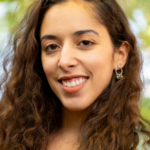
Oumnia Abidi is a fifth year doctoral candidate at the Toulouse School of Management in France. Her research focuses on organizational behavior and human resource management, with a particular emphasis on language-sensitive research, especially the role of non-native accents in the workplace. She examines this topic from both speakers’ and listeners’ perspectives, using a range of quantitative and qualitative methodologies. More broadly, she is interested in the challenges of intercultural communication and in how empathy can foster stronger connections and seeks to brings these insights into her teaching and workshop facilitation.
Who Manages Whom? Futures Literacy for Work in the Age of AI and Extended Reality – Habiba Hajiyeva (Université Toulouse Capitole)
Time:
Friday, 4 June 2027
10.00 a.m. – 1.00 p.m.
Place:
Online (via Zoom)
Number of participants:
20
Course description:
This online workshop explores how artificial intelligence (AI) and extended reality (XR) may transform how people work, collaborate, learn, make decisions, and experience organizational life. Its central theme is the assumptions, values, and managerial choices that shape how they enter workplaces. AI and XR are often presented as inevitable forces that will produce more automated, immersive, and data-driven organizations. The workshop encourages participants to question this deterministic view and to examine how different choices could lead to very different futures of work.
About the lecturer:
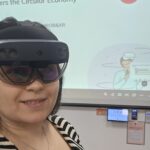 Habiba Hajiyeva is a 4th-year PhD researcher at Toulouse School of Management. She has over 10 years of managerial experience and more than 7 years of academic experience. Habiba holds a master’s degree in Human Resources Management (HRM) from Toulouse School of Management and an MBA from the joint program between Georgia State University (Atlanta, USA) and Azerbaijan State Oil and Industry University (Baku, Azerbaijan). Her master’s research focused on GenAI integration in organizations and the changes it brings to employer-employee relations. Her current research focuses on implementing new technologies, such as virtual and mixed reality, in organizations. Habiba is also a career consultant and conducts sessions on the future of work.
Allgemeines
Kontakt
FAQs
Wer Wir Sind
Wichtige Links
Datenschutz
AGB
Impressum
Studierende
Sprachkurse
Sprachzertifikate
News
FAQs
ZfS
Übersetzungsservice