
Seminar Series on Mental Health Management at the University of Mannheim – ENGAGE.EU

This workshop series aims to equip participants with evidence-based knowledge and practical tools to manage their mental health effectively. By combining theory and hands-on application, participants are given valuable tools to foster long-term mental health in their academic, professional and personal lives.
General Information
Registration will open on 3 September 2026!
To register, please click on the desired course in the list below.
These courses are free of charge!
Language of instruction: English
The courses take place online.
Do you have any questions?: studiumgenerale@service.uni-mannheim.de
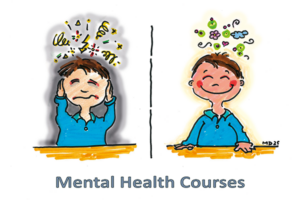
Mental Health Course Programme – Fall 2026
Essentials of Positive Psychology: Strengthen Your Well-being (1/2) - Dr. Belinda Merkle/Ronja Steinhauser (Universität Mannheim)
Time:
Monday, 19 October 2026
5.00 p.m. – 7.00 p.m.
Place:
Online (via Zoom)
Number of participants:
12

Course description:
Can well-being be changed? Yes – and sustainably!
In this workshop, you explore and apply key theories of sustainable mental health, such as Basic Needs Theory, the Hedonic Treadmill, and the Sustainable Happiness Model. You’ll learn what truly influences well-being – and how to ensure that these positive effects last over time.
Through reflection and practical exercises, you will build a strong foundation to enhance mental resilience. Whether in studies, work, or personal growth – this workshop empowers you to take mental well-being into your own hands.
- Recommended in combination with (2/2) Essentials of Behavior Change: Set and Achieve Your Goals – but if that’s not possible, each session can also be attended on its own.
- This session also serves as a helpful foundation for the upcoming resource-specific workshops, by providing an applied framework for sustainable well-being – helping you get the most out of later exercises.
About the lecturers:
 Dr. Belinda Merkle earned her PhD in Educational Psychology at the University of Mannheim. She has several years of teaching experience, having taught courses in positive and educational psychology, and her research includes work on (positive) interventions to foster well-being and success.
 Ronja Steinhauser works at the Chair of Educational Psychology at the University of Mannheim. She has several years of teaching experience and her research includes work on the well-being of PhD students.
Essentials of Behavior Change: Set and Achieve Your Goals (2/2) - Dr. Belinda Merkle/Ronja Steinhauser (Universität Mannheim)
Time:
Monday, 19 October 2026
7.15 p.m. – 9.15 p.m.
Place:
Online (via Zoom)
Number of participants:
12
Course description:
Bridge the gap between good intentions and real change!
This practical workshop focuses on how to set meaningful goals – and actually follow through – in a way that supports both mental health and long-term success.
Based on behavior change models like the Health Action Process Approach, you will practice hands-on tools such as mental contrasting, if–then planning, and coping planning. You’ll learn how to choose goals that truly nourish you – and how to achieve them. Ideal for anyone who wants to move from intention to action.
- Recommended in combination with (1/2) Essentials of Positive Psychology – but each session can also be attended on its own.
- This session also serves as a helpful foundation for the upcoming resource-specific workshops, by introducing evidence-based, practical strategies for setting well-being-related goals and following through with them.
About the lecturers:
Dr. Belinda Merkle earned her PhD in Educational Psychology at the University of Mannheim. She has several years of teaching experience, having taught courses in positive and educational psychology, and her research includes work on (positive) interventions to foster well-being and success.
Ronja Steinhauser works at the Chair of Educational Psychology at the University of Mannheim. She has several years of teaching experience and her research includes work on the well-being of PhD students.
Exploring Mindfulness: Cultivating Present Moment Awareness - Dr. Pedro Gonzalo (Université Toulouse Capitole)
Time:
Friday, 23 October 2026, 10.00 a.m. – 11.30 a.m.
Friday, 30 October 2026, 10.00 a.m. – 11.30 a.m.
Place:
Online (via Zoom)
Number of participants:
15
Course description:
Within the broader family of meditation approaches, this online workshop will allow participants to discover or strengthen mindfulness as a very practical yet powerful way to develop present-moment awareness. The benefits of mindfulness can include improved focus, concentration, emotional regulation, and stress reduction. This highly experiential introductory course invites participants to practice simple techniques and exercises that can be integrated into day-to-day life and routines to contribute to their awareness and well-being. The workshop will therefore be based on a range of interactive activities, including guided and autonomous meditations, group discussions and reflective journaling.
Workshop structure:
This workshop will be divided into 3 parts:
- An initial 90-minute discovery webinar
- One week of self-paced, autonomous exercises provided to participants
- A final 60-minute reconnection and wrap-up session after one week
About the lecturer:

Dr Pedro Gonzalo is an associate professor of Management at University Toulouse Capitole in France. He teaches and conducts research in human resource management (HRM), leadership, creativity, reflective practices, and mindfulness. Prior to his academic career, Pedro worked for 20 years in HRM in the banking sector. He discovered mindfulness seven years ago and has been an active practitioner ever since.
Self-care with AI: Strengthening your mental wellbeing with algorithms - Danielle Ang (Université Toulouse Capitole)
Time:
Wednesday, 11 November 2026
5.15 p.m. – 6.45 p.m.
Place:
Online (via Zoom)
Number of participants:
15
Course description:
Therapy at your fingertips? Make AI your smart companion in building mental wellbeing
We use generative AI and popular digital applications every day to fulfill a variety of tasks. What if we can fully harness the potential of AI to strengthen our mental resilience, build emotional clarity, and manage our overall mental wellbeing? This course provides the building blocks on how to map out your mental health journey with AI!
Artificial Intelligence (AI)-enabled Mental Health Applications (MHAs) have emerged as promising tools with significant clinical evidence on their effectiveness in improving mental health (Figueroa & Aguilera, 2020). Recent studies by a group of Dartmouth researchers showed that participants who spent 8 therapy sessions (6 hours over 8 weeks) with a psychotherapeutic chatbot had 51% reduction in symptoms of depression and 31% in anxiety, reporting high levels of trust and therapeutic alliance (Dartmouth College, 2025). By leveraging user-generated data and advanced algorithmic processing, MHAs offer scalable, cost-effective, and personalized mental health support, including psychoeducation, mood and emotions tracking, cognitive behavioral therapy, and tailored behavioral interventions (O’Loughlin et al., 2019). With the barriers of getting proper mental health care, AI enabled mental health solutions could be equally effective in helping users improve their mental health care (Gamble, 2020).
In this 90-minute course, I will be proposing effective usage of AI in mental wellbeing with key examples from empirical studies, role of AI in mental health support, recommendation of AI enabled mental health apps, and how to circumvent limits and ethical issues (e.g. errors, data privacy, dependance & maximizing effectiveness) (De Freitas et al., 2024; Nosta, 2025a, 2025b; O’Loughlin et al., 2019). Participants would have a couple of interactive sessions to try out a mental health app or learn prompts for generative AI like ChatGPT and design their own mental health app route map. (Activities may be adjusted based on discussion time).
Your takeaways:
You will learn how AI tools can support your emotional wellbeing and build mental resilience, how to select the right AI tools for your wellbeing, strategies on managing ethical implications such as dependance/overreliance, errors (e.g. sycophancy for bad decisions and hallucinations for less recommended interventions) and data privacy. A critical insight into its limitations would be provided together with some tips on creating healthy parameters and boundaries in your mental health-AI experience.
References:
Dartmouth College. (2025). First trial of therapy chatbot suggests AI can provide ‘gold-standard’ mental-health care. https://medicalxpress.com/news/2025-03-clinical-trial-ai-therapy-chatbot.html
De Freitas, J., Uğuralp, A. K., Oğuz‐Uğuralp, Z., & Puntoni, S. (2024). Chatbots and mental health: Insights into the safety of generative AI. Journal of Consumer Psychology, 34(3), 481–491. https://doi.org/10.1002/jcpy.1393
Gamble, A. (2020). Artificial intelligence and mobile apps for mental healthcare: A social informatics perspective. Aslib Journal of Information Management, 72(4), 509–523. https://doi.org/10.1108/AJIM-11-2019-0316
Nosta, J. (2025a). AI-Driven Psychosis: The Right Prompt at the Wrong Time | Psychology Today. https://www.psychologytoday.com/us/blog/the-digital-self/202508/ai-driven-psychosis-the-right-prompt-at-the-wrong-time
Nosta, J. (2025b). Do LLM Conversations Need a ‘Gray Box’ Warning Label? | Psychology Today New Zealand. https://www.psychologytoday.com/nz/blog/the-digital-self/202507/do-llm-conversations-need-a-gray-box-warning-label
O’Loughlin, K., Neary, M., Adkins, E. C., & Schueller, S. M. (2019). Reviewing the data security and privacy policies of mobile apps for depression. Internet Interventions, 15, 110–115. https://doi.org/10.1016/j.invent.2018.12.001
About the lecturer:
 Danielle ANG is a fourth year Marketing Ph.D. student at Toulouse School of Management. Prior to her masters, she majored in clinical psychology at Monash University. She is widely passionate about harnessing the capabilities of AI to improve mental health and sees AI as a tool worth utilizing to improve the barriers of accessing mental health care.
Her current research falls at the intersection of psychology, consumer behavior and AI, and focuses on providing theoretical understanding and managerial insights on the human-AI experience of vulnerable consumers in the context of mental health.
She currently teaches digital marketing to Master students and occasionally meditates with an AI-enabled wellbeing app.
Harnessing Character Strengths … in a Cultural Sensitive Manner - Dr. Tom Hendriks (Tilburg University)
Time:
Tuesday, 24 November 2026
5.30 p.m. – 8.00 p.m.
Place:
Online (via Zoom)
Number of participants:
20
Course description:
Workshop: Harnessing Character Strengths … in a Cultural Sensitive Manner.
In the past decades we have seen a shift from a problem-focused approach to a strengths-based approach. The approach aims to identify and further develop these talents, qualities and character strengths in a person or an organization [1]. Character strengths are positive personality traits that manifest in our thinking, our feelings, our desires, and our actions. They reflect our core identity and contribute to positive outcomes for ourselves and for others, at an individual and a communal level [2]. The VIA Classification of Character Strengths is widely used in positive psychology to help individuals recognize and cultivate their personal strengths. The model identifies 24 character strengths and over the past two decades, the VIA model has proven highly applicable in both research and practice. There are now more than 700 published studies covering domains such as positive mental health, organizational behavior, education, and cross-cultural psychology [3].
In this workshop, we will further explore the topic of character strengths and how strengths can be cultivated in a cultural sensitive manner, based on empirical findings and on the work of Dr. T. Hendriks [4, 5]. In addition, we will practice several character strengths-based activities.
References:
- Hiemstra, D. and E.T. Bohlmeijer, De Sterke-Kanten-Benadering: Persoonlijke kwaliteiten als hefboom voor verandering, in Handboek positieve psychologie: theorie, onderzoek, toepassingen. 2013, Uitgeverij Boom. p. 123-138.
- Niemiec, R.M., VIA character strengths: Research and practice (The first 10 years), in Well-being and cultures: Perspectives on positive psychology H.H. Knoop and A.D. Fave, Editors. 2012, Springer: NewYork. p. 11-30.
- Azañedo, C.M., et al., Character strengths predict subjective well-being, psychological well-being, and psychopathological symptoms, over and above functional social support. Frontiers in psychology, 2021. 12: p. 661278.
- Hendriks, T., Van Treeck, J. and R.d.J. Chaya, J., van Woerkom, M. , Character Strengths as Coping Strategies for Daily Challenges: A Qualitative Study among Adult Refugees. International Journal of Applied Positive Psychology, 2025. 10(2024).
- Hendriks, T., et al., BAMBOO for refugees—A culturally sensitive positive psychology intervention: A protocol for a pilot randomized controlled crial. International Journal of Applied Positive Psychology, 2024: p. 1-30.
About the lecturer:
 Tom Hendriks is the developer of the BAMBOO program, a strengths-based intervention that is running at over 150 asylum centers across the Netherlands, having reached over 6000 refugees. Currently, he is implementing an adapted version of the program, called the Inner Strength Program in Ukraine. He is affiliated to the Department of Medical and Clinical Psychology, Tilburg University, the Netherlands
Allgemeines
Kontakt
FAQs
Wer Wir Sind
Wichtige Links
Datenschutz
AGB
Impressum
Studierende
Sprachkurse
Sprachzertifikate
News
FAQs
ZfS
Übersetzungsservice